Common Symptoms
- Medial elbow pain during the late cocking and acceleration phases of throwing
- Sudden "pop" on the inner elbow followed by immediate loss of throwing velocity
- Valgus instability causing a sense of looseness when the elbow is stressed outward
- Numbness or tingling into the ring and little fingers due to adjacent ulnar nerve irritation
- Swelling and bruising along the inner forearm shortly after acute rupture
- Inability to throw at full effort without pain despite adequate warm-up
UCL Tear MRI Signs: Elbow Throwing Injury and Valgus Instability
Review elbow UCL tear MRI signs, anterior bundle injury, valgus instability, T-sign on MR arthrography, ulnar nerve irritation, and return-to-throwing context.
Overview
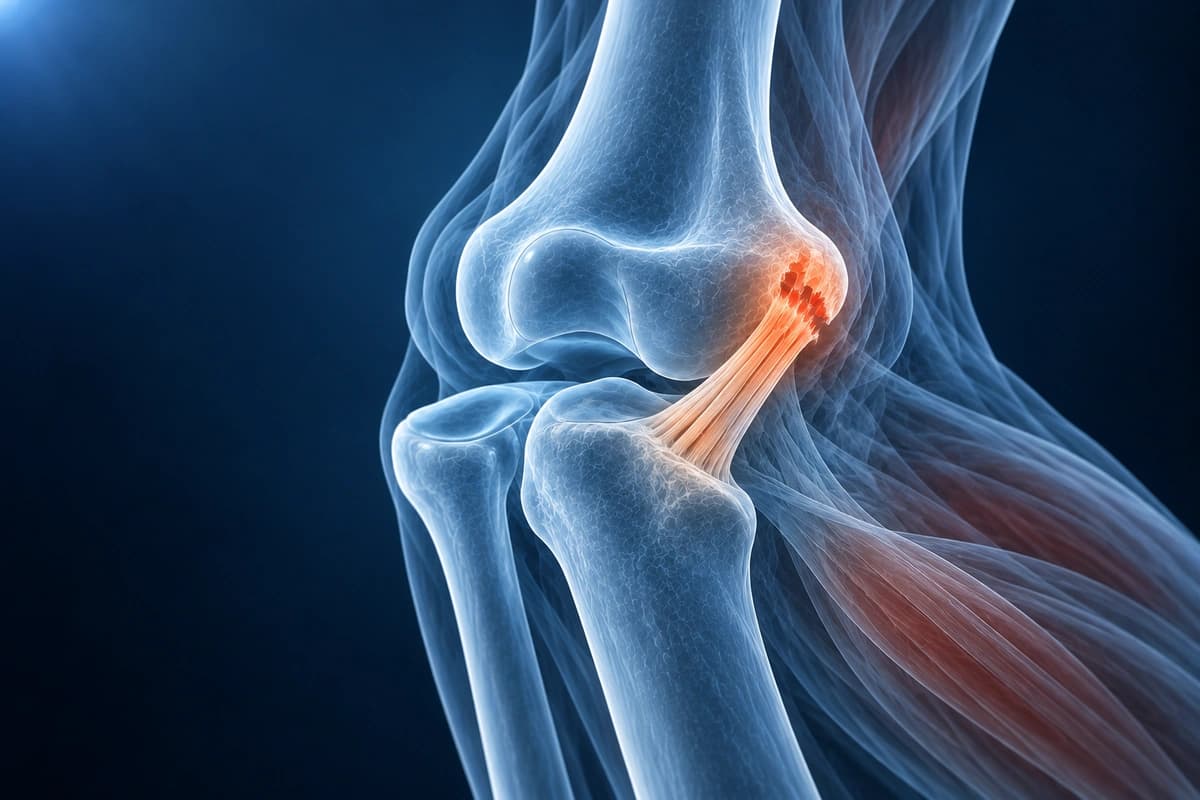
The ulnar collateral ligament (UCL) of the elbow is critical for stability during overhead throwing. UCL injuries are common in baseball pitchers and other throwing athletes. The anterior bundle is the primary stabilizer and most commonly injured component. Our AI consortium evaluates UCL morphology on coronal and axial MRI, with MR arthrography providing superior sensitivity.
Medial elbow pain in throwers can overlap with medial epicondylitis, ulnar nerve irritation, and acute avulsion injury. When symptoms are lateral instead of medial, compare lateral epicondylitis. X-ray can help identify a medial epicondyle or sublime tubercle avulsion, while MRI or MR arthrography is used to assess ligament fiber continuity and partial tearing.
Key Imaging Findings
- UCL thickening or signal abnormality on coronal T2
- Partial or complete ligament discontinuity
- T-sign on MR arthrography (contrast leaking under ligament)
- Sublime tubercle avulsion fracture
- Medial epicondyle bone marrow edema
- Ulnar nerve subluxation or neuritis
Frequently Asked Questions
What is the T-sign on MRI for UCL tears?
The T-sign represents contrast tracking around an undersurface UCL detachment while the superficial layer remains intact. It indicates a partial undersurface tear rather than complete rupture.
Who is at highest risk for a UCL tear?
Overhead throwing athletes, particularly baseball pitchers, are at greatest risk because the valgus torque generated during the late cocking and acceleration phases of pitching can approach or exceed the ultimate tensile load of the UCL. Cumulative microtrauma over years of high-pitch-count throwing leads to progressive attenuation and eventual tear. Gymnasts, volleyball players, and javelin throwers are also at elevated risk. Skeletally immature athletes may sustain a medial apophyseal avulsion rather than a true ligament tear.
What is Tommy John surgery and what are the expected outcomes?
Tommy John surgery is UCL reconstruction using a tendon graft, most commonly the palmaris longus or gracilis, woven through bone tunnels in the medial epicondyle and ulna using the docking technique or a figure-of-eight construct. Return to competitive throwing typically requires 12 to 18 months of rehabilitation. Studies in professional baseball pitchers report return-to-sport rates of approximately 80 to 90 percent, with many athletes returning to their previous or higher level of competition, though a subset experience residual elbow stiffness or ulnar nerve complications.
Sources
- Callaway GH, Field LD, Deng XH, et al. Biomechanical evaluation of the medial collateral ligament of the elbow. J Bone Joint Surg Am. 1997;79(8):1223-1231.
- Timmerman LA, Schwartz ML, Andrews JR. Preoperative evaluation of the ulnar collateral ligament by magnetic resonance imaging and computed tomography arthrography. Evaluation in 25 baseball players with surgical confirmation. Am J Sports Med. 1994;22(1):26-31.
- Timmerman LA, Andrews JR. Undersurface tear of the ulnar collateral ligament in baseball players. A newly recognized lesion. Am J Sports Med. 1994;22(1):33-36.
- Erickson BJ, Gupta AK, Harris JD, et al. Rate of return to pitching and performance after Tommy John surgery in Major League Baseball pitchers. Am J Sports Med. 2014;42(3):536-543.
Related Articles
UCL tear treatment options for throwing athletes — Tommy John reconstruction vs PRP, hybrid repair (UCL repair with internal brace), recovery timelines, and return-to-sport rates.
Understand common elbow conditions including tennis elbow, golfer's elbow, UCL tears, radial head fractures, and OCD lesions.
Compare MRI and ultrasound for tennis elbow, golfer's elbow, UCL tears, and biceps injuries — strengths, limitations, cost, and dynamic assessment.
Get an educational explanation of imaging terms related to UCL Tear
Upload your MRI or X-ray DICOM files for private, AI-powered analysis. 4 models analyze independently — raw scan files stay in your browser.
Upload & AnalyzeMedical Disclaimer: This page is for informational and educational purposes only. It does not constitute medical advice, diagnosis, or treatment. AI-generated analysis may contain errors. Always consult a qualified healthcare professional for medical decisions. Full Disclaimer