UCL Tear: Tommy John Surgery vs PRP Injection
UCL tear treatment options for throwing athletes — Tommy John reconstruction vs PRP, hybrid repair (UCL repair with internal brace), recovery timelines, and return-to-sport rates.
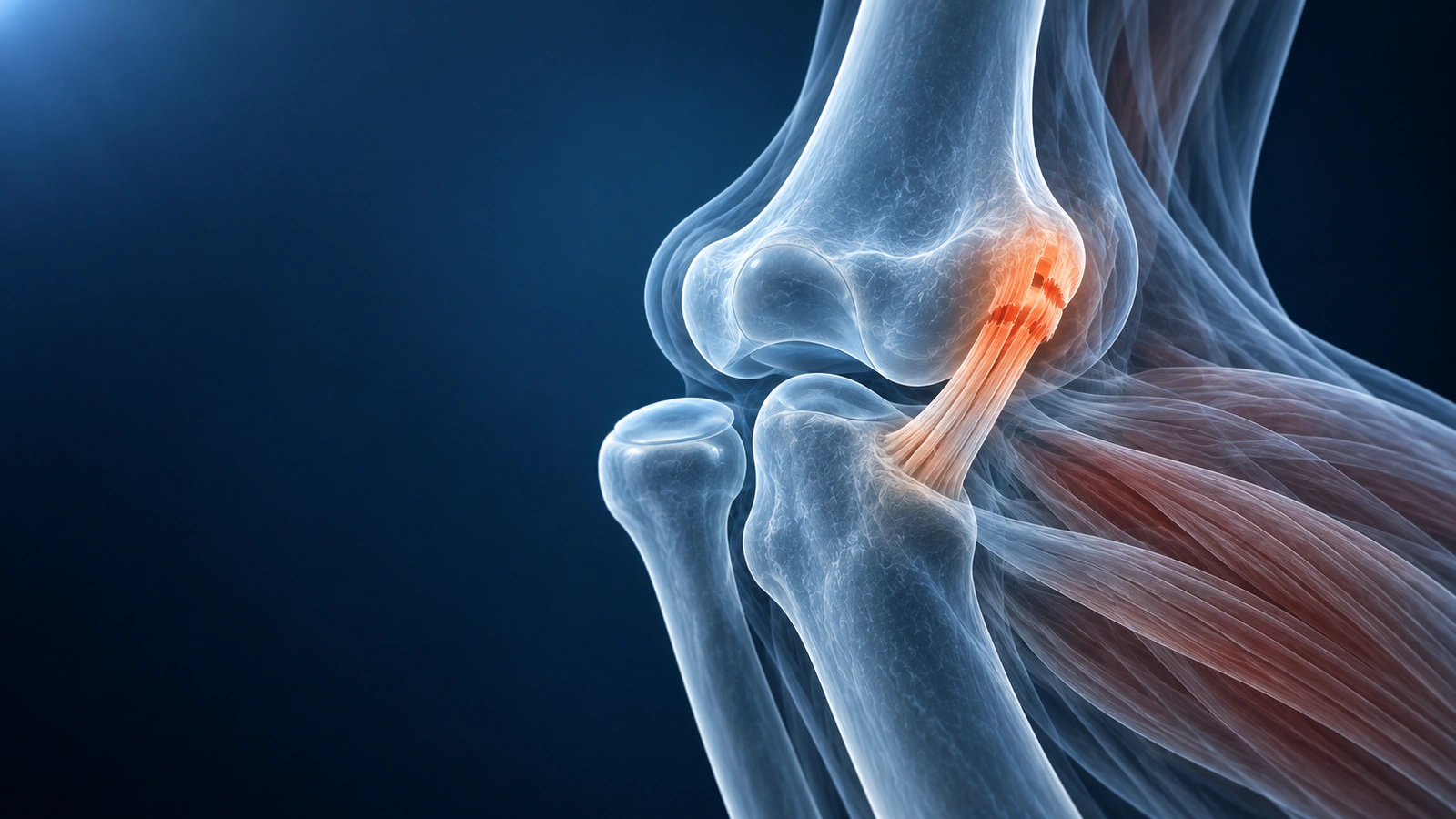
Not every UCL tear needs Tommy John surgery. The right treatment depends on tear location, completeness, the athlete's age, sport, and timeline pressure. In recent years, platelet-rich plasma (PRP) injections and the hybrid internal brace repair technique have changed what's possible for throwing athletes, giving many a shorter path back to competition. Understanding the landscape helps you have a more informed conversation with your sports medicine physician or orthopedic surgeon.
Conservative Treatment First
For low-grade partial UCL tears — particularly proximal partial tears in younger or skeletally immature athletes — conservative management is the starting point. A 6–12 week period of complete rest from throwing, combined with eccentric forearm flexor strengthening and a progressive interval throwing program, can allow enough healing that surgery is never needed.
Conservative treatment works best when the tear is partial (not full-thickness), located at the proximal (humeral) attachment, and the athlete has enough time in the offseason to fully rehabilitate before return to competition. A pitcher mid-season with a complete mid-substance tear, however, will not benefit from rest alone.
PRP Injection
Platelet-rich plasma (PRP) involves drawing a small amount of the patient's own blood, concentrating the platelets in a centrifuge, and injecting the result directly into the UCL under ultrasound guidance. Platelets carry growth factors that can stimulate tissue repair and reduce inflammation. For the UCL specifically, evidence is encouraging but not yet definitive.
Studies on partial proximal UCL tears report return-to-prior-level rates of approximately 70–80% after PRP combined with structured rehabilitation and an interval throwing program. Success rates are notably lower for distal tears (at the ulnar sublime tubercle attachment) and near zero for complete mid-substance tears, where the ligament ends are too far apart for PRP to bridge. The procedure is minimally invasive with low procedural risk, making it a reasonable first-line option in carefully selected partial tears before committing to a 12–18 month surgical recovery.
Tommy John Reconstruction (UCL Reconstruction)
UCL reconstruction — universally known as Tommy John surgery after the first major league pitcher to undergo it in 1974 — remains the historical gold standard for complete UCL tears in overhead throwing athletes. The surgeon removes the torn ligament and replaces it with a tendon graft, most commonly the palmaris longus from the same wrist (absent in about 15% of people, in which case the gracilis or plantaris tendon is used instead).
The graft is woven through bone tunnels in the medial epicondyle and ulna using either the figure-of-8 technique or the modern docking technique, which offers more graft tension control. The reconstructed ligament must undergo biological ligamentization — the graft is initially dead tissue that the body slowly replaces with living collagen — which is why recovery takes 12–18 months. Return to competitive throwing is typically 16 months for pitchers. Long-term studies in professional baseball report return-to-prior-level rates of approximately 80–90%, though a meaningful subset experience residual stiffness or ulnar nerve complications requiring additional treatment.
Hybrid Repair with Internal Brace
The internal brace (also called the DANE TJ procedure or UCL repair with augmentation) is a newer technique that repairs the native UCL rather than replacing it. The surgeon reattaches the torn ligament end back to bone using suture anchors, then augments it with a high-strength suture tape (the internal brace) running alongside the repaired ligament to protect it during early healing and reduce stress during the biologic repair process.
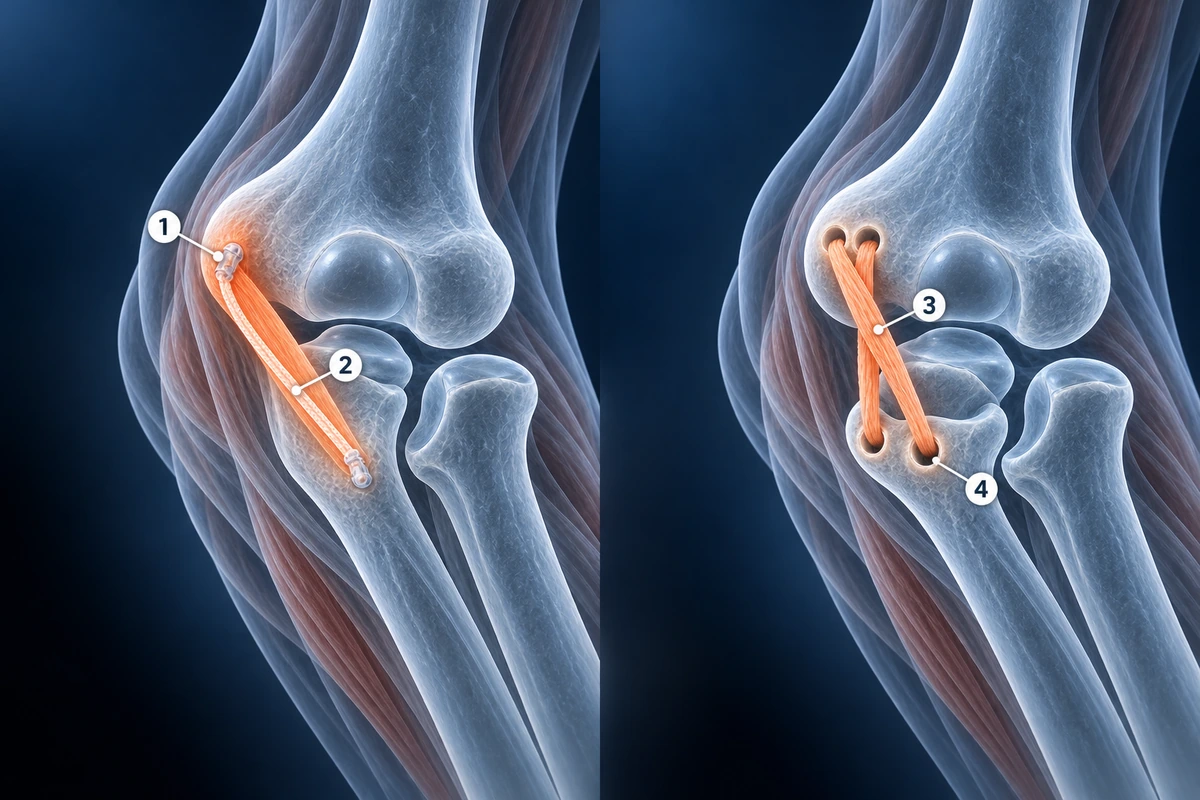
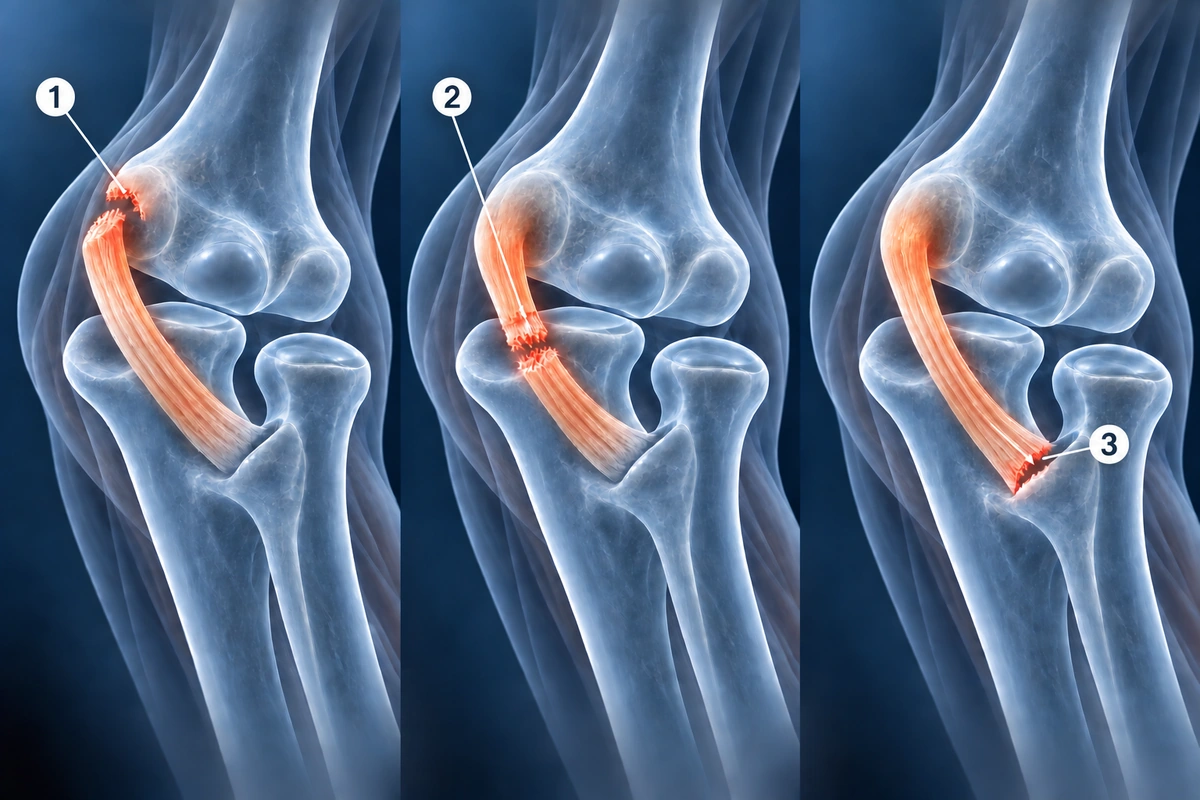
The critical advantage is recovery time: athletes typically return to competitive throwing at 6–9 months, compared to 12–18 months for reconstruction. The technique works best for proximal (humeral-side) or distal (ulnar-side) avulsion injuries where the ligament tears cleanly off the bone, leaving a repairable tissue edge. It is not appropriate for mid-substance tears where the ligament is frayed or attenuated over its length — those cases still require reconstruction. Outcomes data in younger pitchers and collegiate athletes are promising, though long-term data at the professional level continues to accumulate.
How to Choose
Tear location is the single most important factor in treatment selection. Proximal or distal avulsion tears are candidates for repair with internal brace augmentation or for PRP if partial. Mid-substance complete tears require reconstruction. Beyond location, the decision tree involves:
- Age and skeletal maturity — younger athletes and high school pitchers may be better candidates for repair given their healing potential
- Season timing — a pitcher who tears their UCL before the playoffs faces different pressures than one who tears it in the offseason with 12 months before spring training
- Career trajectory — a professional pitcher prioritizes return to prior level even if it means a longer recovery; a recreational player may accept a modest strength deficit from non-operative management
- Completeness of tear — partial tears with intact fibers still crossing the joint line are poor reconstruction candidates but good PRP or repair candidates
For imaging findings that inform these decisions, see our article on UCL tear on MRI and our guide to reading your elbow MRI.
Recovery Timeline Comparison
- PRP injection: 3–4 weeks immobilization, interval throwing at 8–12 weeks, return to competition in 4–6 months in successful cases
- UCL repair with internal brace: return to light tossing at 4–6 months, return to competitive pitching at 6–9 months
- Tommy John reconstruction: return to light tossing at 6 months, return to competitive pitching at 12–18 months (most pitchers target 16 months)
Key Takeaways
- Not every UCL tear requires Tommy John surgery — partial proximal tears may heal with PRP plus structured rehabilitation
- Tear location is the most critical factor: avulsion tears are repairable, mid-substance complete tears require reconstruction
- PRP returns 70–80% of partial proximal UCL tears to prior level of play; success is much lower for distal or complete tears
- Tommy John reconstruction has an 80–90% return-to-prior-level rate but requires 12–18 months of recovery
- Internal brace repair cuts recovery to 6–9 months for correctly selected avulsion patterns but is not suitable for mid-substance tears
- Season timing, athlete age, career level, and tear completeness all factor into the decision alongside tear location
Frequently Asked Questions
Which UCL treatment has the highest return-to-play rate?
Tommy John reconstruction has the most established long-term data, with return-to-prior-level rates of approximately 80–90% in professional baseball pitchers. The internal brace repair shows similar early-outcome rates in appropriately selected avulsion tears, with the added benefit of a shorter recovery. PRP achieves 70–80% success specifically in partial proximal tears. For complete mid-substance tears, reconstruction remains the gold standard.
Can a complete UCL tear heal without surgery?
For most competitive overhead throwing athletes, no. A complete mid-substance UCL tear lacks a sufficient tissue bridge for biologic healing, and PRP cannot close a full discontinuity. Some recreational athletes who stop overhead throwing can function without surgery, accepting modest strength deficits. But any pitcher who wants to return to competitive throwing at full velocity after a complete tear will almost certainly require either reconstruction or internal brace repair depending on tear pattern.
What is the difference between UCL repair and UCL reconstruction?
UCL repair reattaches the athlete's own native ligament back to bone — the original tissue is preserved and healed, typically augmented with a suture tape internal brace. UCL reconstruction replaces the torn ligament entirely with a tendon graft harvested from elsewhere in the body. Repair is only possible when there is enough healthy native ligament tissue to reattach, typically in avulsion-type tears. Reconstruction is used when the ligament is too damaged or attenuated for primary repair.
Is the internal brace always the best option?
No — candidacy depends entirely on tear pattern. The internal brace technique produces excellent outcomes for clean proximal or distal avulsion tears where the ligament has pulled off the bone. For mid-substance tears where the ligament is frayed or degenerated along its length, there is no healthy tissue to repair, and reconstruction with a graft is required. Applying an internal brace to a mid-substance tear would mean augmenting damaged tissue rather than healthy tissue, which does not produce acceptable outcomes.
How successful is PRP for UCL tears?
For partial proximal UCL tears in throwing athletes, PRP combined with a structured rehabilitation and interval throwing program returns approximately 70–80% of athletes to their prior level of play. Success rates drop significantly for distal tears at the sublime tubercle, and PRP is not effective for complete full-thickness tears. The procedure carries minimal risk since it uses the patient's own blood, and a failed PRP attempt does not preclude surgery afterward. Most surgeons recommend it as a worthwhile first step before committing to a 12–18 month surgical recovery in eligible partial tear patients.
Related Articles
Understand your elbow MRI report including UCL evaluation, epicondylitis findings, and OCD lesion staging.
Understand common elbow conditions including tennis elbow, golfer's elbow, UCL tears, radial head fractures, and OCD lesions.
Compare MRI and ultrasound for tennis elbow, golfer's elbow, UCL tears, and biceps injuries — strengths, limitations, cost, and dynamic assessment.
Related Conditions
Ready to analyze your imaging? Upload your MRI or X-ray for AI-powered analysis
Upload your MRI or X-ray DICOM files for private, AI-powered analysis. 4 models analyze independently — raw scan files stay in your browser.
Start AnalysisMedical Disclaimer: This page is for informational and educational purposes only. It does not constitute medical advice, diagnosis, or treatment. AI-generated analysis may contain errors. Always consult a qualified healthcare professional for medical decisions. Full Disclaimer