
How to Read an Elbow MRI: A Patient's Guide
Understand your elbow MRI report including UCL evaluation, epicondylitis findings, and OCD lesion staging.
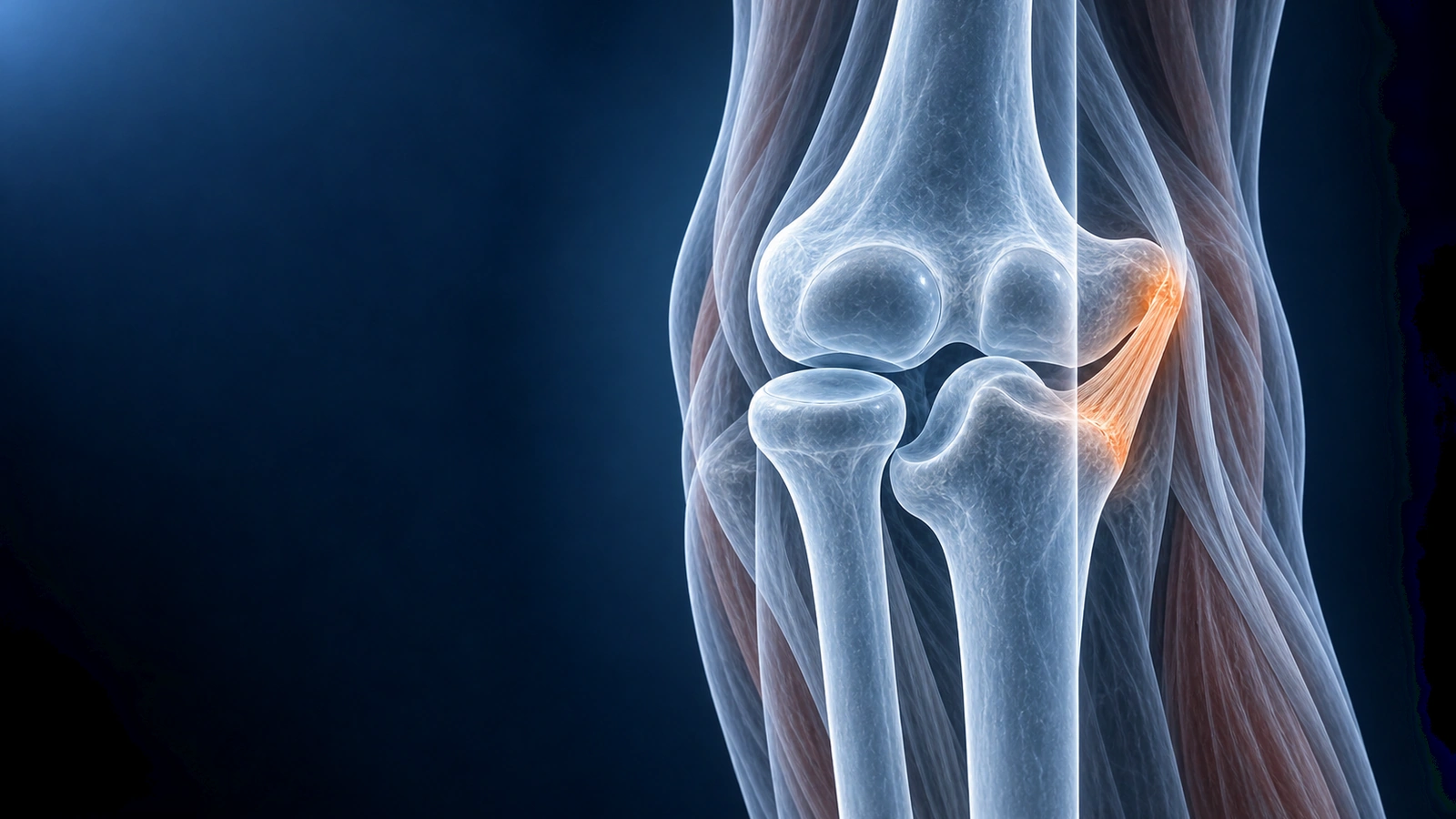
Elbow MRI is a specialized imaging study that provides detailed visualization of the ligaments, tendons, cartilage, and bones around the elbow joint. While your radiologist and orthopedic surgeon interpret the images professionally, understanding the basics can help you participate in discussions about your diagnosis and treatment plan.
Standard MRI Sequences
- T1-weighted images show excellent anatomical detail with fat appearing bright and fluid appearing dark
- T2-weighted and STIR sequences highlight fluid and edema as bright signal, making tears, inflammation, and bone marrow edema visible
- Proton density sequences provide high contrast between cartilage and fluid, ideal for assessing articular surfaces
- MR arthrogram uses injected contrast to distend the joint, improving visualization of partial ligament tears and loose bodies
UCL Assessment on MRI
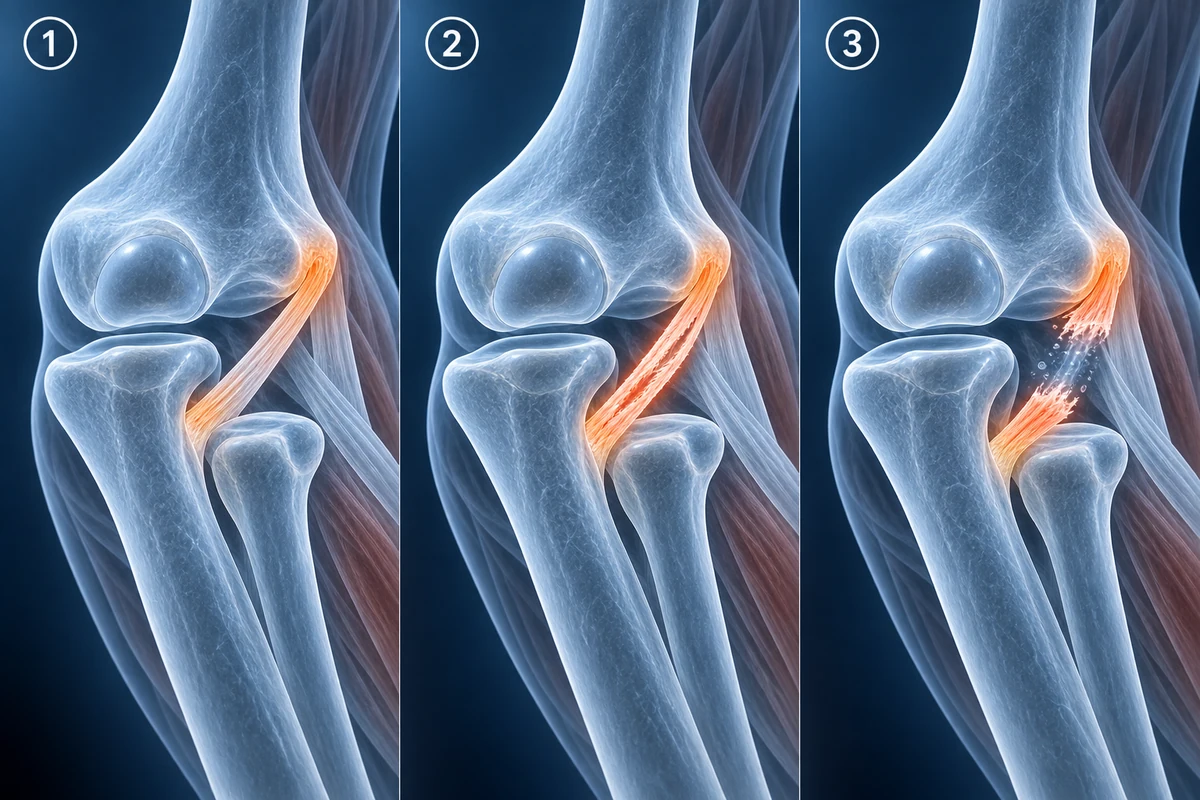
The ulnar collateral ligament is best evaluated on coronal images. A normal UCL appears as a dark, taut band connecting the medial epicondyle to the sublime tubercle of the ulna. On T2-weighted images, a torn UCL shows high signal within or around the ligament. Partial tears may show thickening with internal signal changes, while complete tears demonstrate discontinuity with surrounding fluid. MR arthrogram increases sensitivity by showing contrast leaking through the torn ligament. For more on UCL injuries, see our guide on elbow injury types.
Epicondylitis on MRI
Lateral epicondylitis (tennis elbow) appears on MRI as increased T2 signal within the common extensor tendon origin, often with tendon thickening. Severe cases show partial tearing with fluid-signal gaps within the tendon. Medial epicondylitis shows similar changes at the flexor-pronator origin. Associated findings may include bone marrow edema at the epicondyle and peritendinous fluid. Learn about healing expectations in our article on tennis elbow healing without surgery.
OCD Lesions on MRI
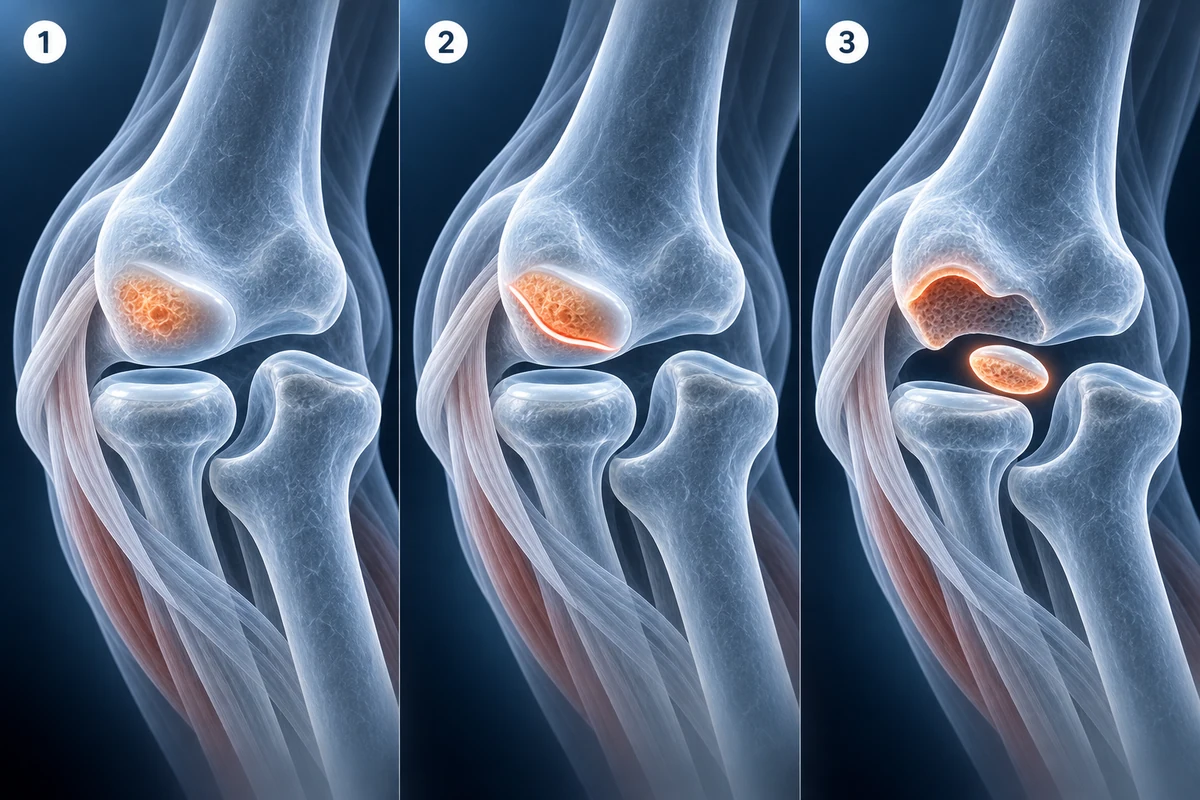
Osteochondritis dissecans of the capitellum is staged by MRI based on stability. Stable lesions show subchondral bone changes with intact overlying cartilage. Unstable lesions demonstrate a high-signal line between the fragment and parent bone on T2 images, indicating fluid undermining the fragment. Detached fragments appear as loose bodies within the joint. MRI staging directly guides whether conservative or surgical treatment is appropriate.
Key Takeaways
- T2-weighted sequences are the workhorse for detecting tears, edema, and inflammation
- The UCL is best seen on coronal images and may require MR arthrogram for subtle tears
- Epicondylitis shows as tendon signal changes and thickening at the epicondyle
- OCD lesion stability on MRI determines conservative versus surgical management
Frequently Asked Questions
Do I need contrast for an elbow MRI?
Standard elbow MRI without contrast is sufficient for most conditions including epicondylitis, fractures, and most tendon injuries. MR arthrogram (with injected contrast) is recommended when evaluating subtle UCL tears, loose bodies, or cartilage defects that may not be visible on standard sequences.
What does increased signal on elbow MRI mean?
Increased signal on T2-weighted images indicates the presence of fluid, edema, or inflammation. In tendons and ligaments, which should appear dark on all sequences, increased signal suggests damage ranging from tendinosis to partial or complete tears. The pattern and location of signal changes help determine the specific diagnosis.
Related Articles
Understand common elbow conditions including tennis elbow, golfer's elbow, UCL tears, radial head fractures, and OCD lesions.
Learn about lateral epicondylitis natural healing rates, physical therapy options, and when surgical intervention is needed.
Compare MRI and ultrasound for tennis elbow, golfer's elbow, UCL tears, and biceps injuries — strengths, limitations, cost, and dynamic assessment.
Related Conditions
Ready to analyze your imaging? Upload your MRI or X-ray for AI-powered analysis
Upload your MRI or X-ray DICOM files for private, AI-powered analysis. 4 models analyze independently — raw scan files stay in your browser.
Start AnalysisMedical Disclaimer: This page is for informational and educational purposes only. It does not constitute medical advice, diagnosis, or treatment. AI-generated analysis may contain errors. Always consult a qualified healthcare professional for medical decisions. Full Disclaimer